
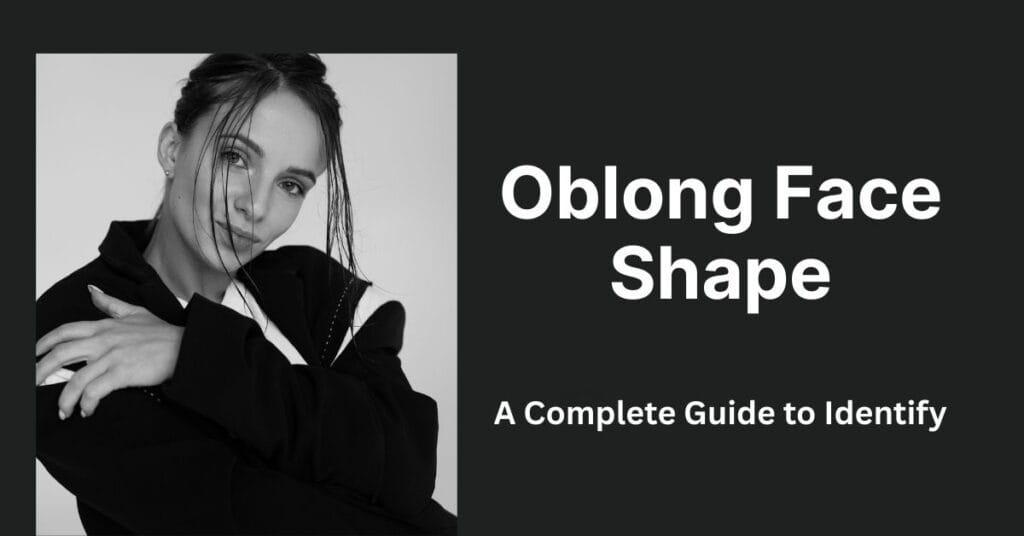
What Is an Oblong Face Shape?
An oblong face shape is a face that is noticeably longer than it is wide, with the forehead, cheekbones, and jawline all measuring roughly equal in width. The overall outline resembles a tall rectangle or an elongated oval. Unlike square faces where the jaw is angular, oblong faces often have a softer, more rounded jawline combined with that signature length.
Oblong is sometimes called rectangle face shape or long face shape. These terms are used interchangeably and describe the same basic characteristic: the face length is significantly greater than the face width, and the widths across the face stay consistent from top to bottom without any single feature being dramatically wider or narrower.
This face shape is fairly common in both men and women. Many well-known faces in fashion, film, and sport are oblong, and it is a face shape that responds extremely well to the right styling choices.
How to Tell If You Have an Oblong Face Shape
The easiest way to identify an oblong face shape is to compare your face length to your face width. If your face is significantly longer than it is wide and your forehead, cheeks, and jaw all appear roughly similar in width, you likely have an oblong face.
You can confirm this with a simple measurement. Use a soft measuring tape and take four key measurements. Measure your forehead width at the widest point halfway between your eyebrows and hairline. Measure your cheekbone width at the widest point across your cheeks. Measure your jaw width from below one ear across to below the other. Finally measure your face length from the center of your hairline down to the tip of your chin.
If your face length is significantly greater than any of your width measurements, and all three width measurements are roughly similar to each other, you have an oblong face shape.
You can also use our free AI Face Shape Detector to get a precise, photo-based result in seconds.
Try the Free Face Shape Detector
Oblong Face Shape vs. Oval Face Shape
The most common confusion is between oblong and oval face shapes. Here is how to tell them apart clearly.
An oval face is slightly longer than it is wide, with the forehead being the widest part, gently tapering to a softer jaw. The proportions are balanced and harmonious. An oblong face is much longer than it is wide, with consistent widths from forehead to jaw and a more pronounced length-to-width ratio.
The simplest test is to look at your face in the mirror and ask whether your face looks balanced and proportionate, or whether it looks noticeably long and narrow. Oval faces look balanced. Oblong faces look elongated.
Another difference is that oval faces have a forehead that is slightly wider than the jaw, giving a gentle tapering effect. Oblong faces have a forehead, cheeks, and jaw that are all very similar in width, giving a more uniform, column-like outline.
Oblong Face Shape vs. Rectangle Face Shape
Oblong and rectangle face shapes are often used as synonyms, and for styling purposes they are treated identically. The only technical distinction some experts make is that rectangle faces have slightly more angular jaw corners, while oblong faces have a softer, more rounded jawline.
In practice, the styling advice is exactly the same for both because the core characteristic they share is the same: a face that is much longer than it is wide with consistent widths from top to bottom.
The 5 Characteristics of an Oblong Face Shape
A face length that is noticeably greater than the face width is the defining feature. Most oblong faces have a length to width ratio of more than 1.5 to 1.
The forehead, cheekbones, and jaw are all roughly equal in width. There is no single widest point that stands out the way cheekbones dominate an oval face or a jaw dominates a square face.
The jawline is either soft and rounded or mildly angular. It does not have the sharp squared corners of a square face shape.
The chin is typically narrow and may be slightly pointed or flatly rounded.
The overall appearance is tall, refined, and elongated. Oblong faces often appear longer when framed by straight hair or when styling adds height at the crown.
Best Hairstyles for Oblong Face Shape
The primary styling goal for oblong face shapes is to add width and reduce the appearance of length. Every hairstyle choice should aim to make the face appear shorter and wider, creating the impression of more balanced proportions.
Bangs are the single most effective tool for oblong faces. Any type of bang shortens the face by breaking up the long vertical line from hairline to chin. Full fringe bangs, side-swept bangs, curtain bangs, wispy bangs and blunt bangs all work well. This is the one styling recommendation that applies universally to every person with an oblong face shape.
Voluminous waves and curls at the sides are extremely flattering because they add width at cheek and jaw level. Loose beach waves, big bouncy curls, and textured wavy styles all create the horizontal fullness that balances an oblong face beautifully. The more volume sits at the sides rather than the top, the more balanced the face appears.
Chin-length bobs and lobs add width right at jaw level. A bob ending anywhere from the chin to the collarbone is a classic recommendation for oblong faces because the ends of the hair frame the face at its widest needed point. Slightly flipped-out ends or a blunt cut with outward curve at the bottom enhances the width-adding effect.
Layers at the sides of the face create fullness that balances length. When a hairstylist cuts layers that frame the cheeks and jaw, the face appears wider and shorter. Ask for face-framing layers that start at cheekbone level rather than very long layers that start below the jaw.
Short and medium length cuts generally work well for oblong faces because they prevent the added length that very long straight hair can create. Haircuts that fall between the chin and collarbone tend to be most flattering.
Hairstyles to avoid for oblong face shapes include anything that adds height at the crown without width at the sides. Very tall updos, high topknots, and voluminous blowouts with lots of root lift make an already long face appear even longer. Sleek straight hair without any volume or movement hangs close to the face and emphasizes the length rather than adding balance. Very long hair past the chest that is worn straight and flat is one of the least flattering looks because it echoes and reinforces the elongated silhouette. Center parts with no bangs create a direct vertical line down the middle of the face that draws the eye straight down and makes the face look as long as possible.
Best Men’s Hairstyles for Oblong Face Shape
For men with oblong face shapes, the same principle applies: add width and avoid adding height.
Textured medium-length hairstyles with volume at the sides are ideal. A style that has some width at the temples and sides creates balance without requiring dramatic styling.
Undercuts with longer hair on top can work if the top is styled to the side rather than straight up. The key is to avoid styling the top hair vertically upward, which adds height. Instead, sweep the longer top hair to the side for a horizontal effect.
Quiff styles can be flattering if the quiff is kept low and wide rather than tall. A low, textured quiff with side volume works well.
Buzz cuts and very short crops can look striking on oblong faces because they remove the elongating effect of length. A well-shaped buzz cut that is slightly wider at the sides emphasizes the face shape without adding unwanted length.
The beard is an important consideration for oblong-faced men. A wider, bushier beard at the sides adds horizontal width to the lower face. Avoid very long chin beards that grow straight down, as these visually extend the face length further. A short to medium full beard kept trimmed at the chin and slightly fuller at the sides creates the most balance.
Best Glasses for Oblong Face Shape
The goal with glasses for oblong faces is to choose frames that add horizontal width and break up the vertical length of the face.
Oversized frames are one of the best choices. Large frames that are wide relative to the face width add significant horizontal presence and make the face appear shorter and more balanced.
Wide rectangular frames are a classic recommendation. Frames that are noticeably wider than they are tall add a strong horizontal line across the face. The wider the frame, the more effectively it balances an oblong face.
Round and oval frames add width because of their circular shape. The curved top and bottom of round frames contrast the vertical length of an oblong face and create a sense of horizontal balance.
Frames with decorative top bars or embellishments along the upper rim draw the eye horizontally across the face. Any frame detail that creates a strong horizontal visual line is beneficial.
Frames with strong color contrast such as bold dark frames against light skin or patterned frames draw attention to the glasses themselves, adding visual width at eye level.
Glasses to avoid for oblong faces include small or narrow frames that sit proportionally small against the face. Tiny round frames or narrow rectangular frames leave much of the face exposed above and below, emphasizing its length. Very tall frames that have more vertical height than horizontal width add to the face’s elongated appearance. Rimless or semi-rimless styles provide very little visual weight and do not add the horizontal balance that oblong faces benefit from.
Makeup Tips for Oblong Face Shape
Makeup for oblong face shapes focuses on creating the illusion of a shorter, wider face. Horizontal placement and width-adding techniques are the priority.
Contouring for oblong faces targets the forehead hairline and the chin. Apply contour powder or cream along the hairline at the top of the forehead. This darkens the hairline and makes the forehead appear shorter, reducing the overall face length visually. Apply contour at the chin tip as well to shorten the lower face. Avoid contouring down the sides of the face in a slimming technique as this increases the appearance of length.
Blush placement for oblong faces should be horizontal. Apply blush across the cheeks in a wide, horizontal sweep rather than at an upward diagonal angle. Blending blush outward toward the temples rather than upward toward the cheekbones creates a horizontal visual line that adds perceived width.
Highlighter should be applied horizontally across the cheekbones in a wide sweep rather than down the center of the face. Avoid highlighting the nose bridge in a long vertical stripe as this draws the eye straight down and emphasizes face length. Instead, a wide horizontal highlight across the cheeks is most flattering.
Eyebrows should be kept relatively flat with minimal arch. Highly arched brows create a vertical movement that adds apparent height to the face. Straighter, more horizontal brows with a gentle low arch are much more flattering for oblong face shapes.
Eye makeup can be extended slightly outward beyond the outer corners of the eyes. Extending liner and eyeshadow horizontally adds width at eye level and is one of the best tricks for oblong faces.
Lip color should emphasize the full width of the lips. Over-lining the corners of the lips very slightly or choosing bold, full lip looks draws attention to the lips and creates a horizontal focal point at the lower face.
Oblong Face Shape Celebrities
Seeing real examples helps confirm whether you share this face shape. Many well-known people have oblong face shapes and have found styles that work beautifully with their proportions.
Women with oblong face shapes include Sarah Jessica Parker, who frequently uses curtain bangs and wavy hair to add width. Liv Tyler is another example with a classic elongated face shape. Meryl Streep has an oblong face and uses soft layered waves to balance her proportions.
Men with oblong faces include Ben Affleck, who uses facial hair effectively to add width to his lower face. Adam Sandler has a long face shape and tends toward medium length textured cuts. Conan O’Brien is a well-known example of an oblong face shape.
Noticing how these individuals style their hair and use facial hair reveals the same principles in action: adding width, avoiding height, and using horizontal styling elements to balance the face.
How to Identify Your Face Shape Online Free
The fastest way to confirm whether you have an oblong face shape is to use our free AI Face Shape Detector. Upload a front-facing photo or use your device camera, and the AI maps your facial landmarks and measures your proportions to identify your face shape within seconds.
You will receive your face shape result with a confidence percentage, a breakdown of how your face compares to all six shapes, and personalized recommendations for hairstyles, glasses frames, makeup techniques, and beard styles suited to your specific face shape.
Use the Free Face Shape Detector
Frequently Asked Questions About Oblong Face Shape
What is an oblong face shape?
An oblong face shape is a face that is noticeably longer than it is wide, with the forehead, cheekbones, and jawline all measuring roughly equal in width. It is sometimes called a rectangle or long face shape. The face outline resembles a tall, elongated oval or rectangle.
What is the difference between oblong and oval face shapes?
An oval face is slightly longer than it is wide with balanced, harmonious proportions and a forehead slightly wider than the jaw. An oblong face is much longer than it is wide with all widths roughly equal from top to bottom. Oval looks balanced, oblong looks elongated.
What hairstyle is best for an oblong face shape?
Bangs are the single most effective hairstyle choice for oblong faces because they shorten the face by breaking up the long vertical line. Voluminous waves and curls at the sides, chin-length bobs, and face-framing layers at cheek level all add width and balance. Avoid height at the crown and sleek straight hair without volume.
What glasses suit an oblong face shape?
Wide oversized frames, wide rectangular frames, and round or oval frames all work well by adding horizontal width. Avoid small or narrow frames and very tall frames that emphasize the face’s length.
Is oblong face shape attractive?
Every face shape has its own appeal and its own iconic representatives in beauty, fashion, and culture. Oblong faces are associated with an elegant, refined appearance. Many celebrated models, actors, and public figures have oblong face shapes. With the right styling choices, oblong faces look striking and sophisticated.
What is the best makeup for an oblong face shape?
Contour the hairline and chin to shorten the face. Apply blush in a wide horizontal sweep across the cheeks rather than upward. Use flat, slightly arched brows. Extend eye makeup outward horizontally. All these techniques work together to create the illusion of a shorter, wider face.
What beard style suits an oblong face shape?
A short to medium full beard kept wider at the sides and trimmed at the chin adds horizontal width to the lower face. Avoid very long chin beards that grow straight down as they visually extend the face length further.
How do I know if I have an oblong or rectangle face shape?
For styling purposes these are the same shape and treated identically. Some experts technically distinguish them by jaw angle, with rectangle faces having slightly more angular jaw corners and oblong faces having a softer rounded jaw. The styling recommendations are the same for both.
Explore More Free Tools and Guides
Face Shape Detector identifies your face shape from a photo with personalized style recommendations for hair, glasses, makeup, and beard.
What Is My Face Shape Quiz gives you a 5-question quiz to identify your face shape without uploading a photo.
Men’s Face Shapes Guide covers all face shapes specifically for men with hairstyle and beard recommendations.
Skin Tone Detector finds your exact skin tone and undertone from a photo with personalized color recommendations.
Beauty Calculator calculates your Golden Ratio facial harmony score from a photo.