
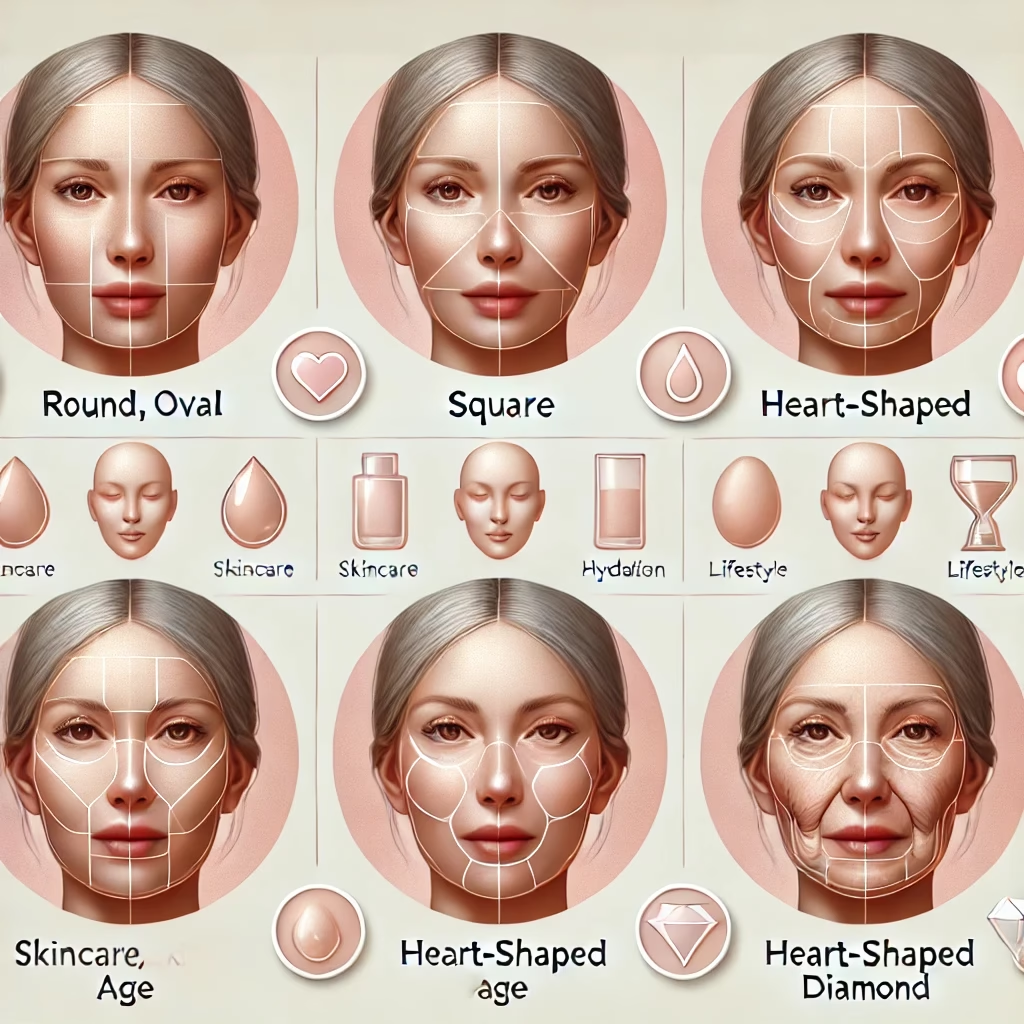
Which Face Shape Ages the Worst?
Every face shape ages differently. The way your face changes over time is significantly influenced by your underlying bone structure, the distribution of facial fat, and how these interact as you get older. Some face shapes tend to show the visible signs of aging earlier and more dramatically. Others maintain a youthful appearance well into later decades.
This question does not have a single simple answer because facial aging depends on multiple factors beyond face shape alone. But research in aesthetic medicine, clinical observation, and facial anatomy science do reveal clear patterns in how different face shapes age. This guide covers exactly how each face shape ages, which shapes tend to show aging most and least visibly, and what you can do regardless of your face shape to slow the visible aging process.
Want to know how old you look right now? Try our free Face Age Detector for an instant AI-based facial age estimate.
Try the Free Face Age Detector
How Faces Age — The Science
Understanding why face shapes age differently requires understanding how facial aging works at a biological level.
Facial aging happens through four main processes occurring simultaneously. Collagen and elastin loss begins in the mid-20s and accelerates after 40, causing skin to lose firmness and begin to sag. Facial fat loss and redistribution is the second major process — the fat pads that create fullness and youthful volume in the cheeks and temples gradually shrink and migrate downward, creating hollowing in the upper face and heaviness in the lower face. Bone resorption occurs as the underlying facial bones gradually lose density over decades, causing the face to lose structural support. Muscle changes from decades of repeated expressions create the fine lines and wrinkles we associate most visibly with aging.
The critical factor that makes face shape relevant is the starting position of your facial fat. Different face shapes have different fat distributions, and where you start significantly influences how the aging process plays out visually.
Oval Face Shape Aging
Oval faces age moderately well overall. The balanced proportions and naturally harmonious feature distribution that make oval faces attractive in youth also serve them relatively well through the aging process.
The main challenge for oval faces during aging is the hollowing of the mid-face that occurs as the cheek fat pads thin and descend. Oval faces depend on their balanced proportions for their attractiveness, and when the cheeks hollow and the mid-face volume diminishes, the previously harmonious proportions can shift noticeably.
The lower face tends to develop jowling as the oval face ages and skin laxity increases. This can gradually shift the perceived face shape from oval toward more of a square or rectangular appearance as the lower face becomes heavier.
Overall aging trajectory: moderate. The balanced starting proportions help, but mid-face volume loss is a real challenge that becomes visible in the 40s and 50s.
Round Face Shape Aging
Round faces consistently age the best of all the face shapes in terms of maintaining a youthful appearance over time. This is one of the most well-supported observations in aesthetic medicine and is consistent across multiple studies and clinical populations.
The reason round faces age the best is their facial fat distribution. Round faces have full, prominent cheeks with generously distributed facial fat. As aging progresses and the universal fat loss that affects all faces occurs, round-faced people are starting from a position of greater fat volume. They lose fat as everyone does but from a higher starting point, meaning they maintain fuller cheeks and more youthful facial volume for significantly longer than other face shapes.
The same full cheeks that people sometimes wish to minimize with contouring in their 20s and 30s become a genuine anti-aging advantage from the 40s onward. The fullness that reads as round and circular in youth reads as youthful and fresh in middle age and beyond.
Additionally the soft, rounded jawline of round faces does not develop the sharp jowling and dramatic sagging at the jaw corners that more angular face shapes can experience. The gradual descent of tissue along a rounded jaw is less visually jarring than the same descent along a defined angular jaw.
Overall aging trajectory: best. Full cheeks provide lasting volume and the soft jawline ages gracefully. Round-faced people frequently appear significantly younger than their actual age in their 40s, 50s, and beyond.
Square Face Shape Aging
Square faces age in a way that is quite variable depending on the individual but often shows more visible lower face changes than round or oval faces.
The strong angular jawline that defines the square face shape and reads as powerful and masculine in younger years can become more pronounced and heavier-looking as age progresses. As the skin along the jaw loses elasticity and begins to descend, the descent follows the angular jaw contour and can create more dramatically visible jowling than on softer-jawed face shapes. The defined corners of a square jaw can become the anchoring points for pronounced jowls.
The upper face of square-faced individuals tends to maintain structure well because the strong bone structure provides lasting support. The temples and forehead age relatively gracefully on square faces.
The primary aging challenge for square faces is therefore the lower face — the jaw and jowl area. With appropriate skincare, facial fitness, and if desired professional treatments targeting the lower face, square-faced people can manage this effectively.
Overall aging trajectory: moderate. Strong upper face bone structure ages well. The lower jaw can show more visible age-related changes from the 40s onward.
Heart Face Shape Aging
Heart faces age in a distinctive pattern that is influenced by their prominent high cheekbones and narrow lower face.
The high cheekbones of heart faces are an aging advantage in the mid-face area. High, prominent cheekbones maintain structural support for longer and are slower to hollow than lower or flatter cheek positioning. The prominent cheekbone structure also tends to support the overlying skin more effectively as collagen declines.
The narrower lower face of heart shapes means there is less tissue in the jaw area to descend and create jowling. The delicate chin and jaw of a heart face can remain looking relatively refined as age progresses.
The main aging challenge for heart faces is the forehead area. The wide forehead of a heart face develops horizontal lines and forehead creases, and the temples can hollow significantly as temporal fat pads thin with age, creating a gaunt appearance at the sides of the forehead.
Overall aging trajectory: moderately good. The high cheekbones are a genuine aging asset. Temple hollowing can become a visible concern from the 40s onward.
Oblong and Rectangle Face Shape Aging
Oblong and rectangle face shapes tend to age in a way that can make the face appear even more elongated than it already is naturally.
As the midface volume descends and hollows, the elongated face can lose the subtle width that kept it looking balanced in youth. The cheeks thin and the face can look increasingly long and narrow. The strong angular jawline of rectangle faces can develop pronounced jowling similar to square faces.
The forehead of oblong faces often develops vertical lines between the brows and horizontal forehead lines that become more visible than on wider face shapes because the longer forehead provides more surface area for lines to develop.
The good news for oblong and rectangle faces is that the strong bone structure and well-defined features that characterize these shapes maintain structural integrity well. The underlying architecture remains strong even as the soft tissue changes.
Overall aging trajectory: moderate to challenging. The primary concerns are increasing elongation as mid-face hollows and lower face jowling.
Diamond Face Shape Aging
Diamond faces age in a way that is heavily influenced by what happens to the prominent wide cheekbones that define the shape.
In the earlier stages of aging the prominent cheekbones of diamond faces remain a strong positive feature. The well-defined mid-face structure holds up well through the late 30s and into the 40s.
As aging progresses and fat descends, the tissue that previously sat over the high cheekbones migrates downward. This can create a distinctive pattern where the cheekbones appear to become more prominent and bony as the overlying fat thins, while the lower face gains volume from the descended fat. The result can look gaunt at the cheekbones and heavy at the jowls simultaneously.
Overall aging trajectory: moderate. The prominent cheekbones are an asset in early aging but require volume restoration as fat descends in later decades.
Which Face Shape Ages the Worst Overall
Based on clinical observation and research in aesthetic medicine, rectangle and oblong face shapes alongside square faces tend to show the most visible signs of aging for most people. The combination of elongating mid-face hollowing, angular jaw jowling, and the additional challenge of maintaining width in an already long narrow face creates the most demanding aging scenario.
Round faces consistently show aging the least visibly, followed by heart faces with their high cheekbones.
However it is critically important to emphasize that face shape is just one factor in facial aging. It influences the pattern and location of visible changes but the rate at which those changes occur is determined much more by lifestyle factors, genetics, sun exposure, and skincare than by face shape alone.
What Ages Your Face Faster Than Your Face Shape
These factors have far greater impact on how quickly your face ages than your face shape does.
Sun exposure is the single biggest controllable factor in facial aging. UV radiation is responsible for up to 80 percent of visible facial aging. People who consistently protect their skin with SPF 30 or higher every day show dramatically less visible aging than people of the same age who do not. This applies to all face shapes equally and its effect dwarfs the influence of face shape on aging appearance.
Smoking accelerates facial aging significantly. Nicotine restricts blood flow to skin cells, depleting them of oxygen and nutrients. The repeated facial movements of smoking also create premature lines around the mouth. Smokers typically appear five to ten years older than non-smokers of the same age regardless of face shape.
Chronic sleep deprivation shows in the face rapidly. During sleep the body produces growth hormone which drives skin cell repair and regeneration. Consistently getting less than seven hours of quality sleep creates visible dark circles, puffiness, dull skin tone, and accelerates the formation of fine lines.
Diet and hydration directly affect skin quality. Chronically dehydrated skin appears older because fine lines look deeper and the skin loses plumpness. High sugar diets accelerate glycation, a process that damages collagen and accelerates structural aging of the skin.
Stress elevates cortisol which breaks down collagen and creates inflammation that accelerates skin aging. Chronic high stress is visibly aging across all face shapes.
How to Age Gracefully Regardless of Your Face Shape
Whatever face shape you have, these evidence-based practices slow the visible aging process most effectively.
Daily SPF is the single most important habit for maintaining a youthful appearance. Apply SPF 30 or higher every morning regardless of the weather or whether you plan to be outdoors. UV exposure through windows accumulates. This habit has the greatest anti-aging return of any skincare practice.
Retinol used consistently at night is the gold standard anti-aging skincare ingredient with decades of research supporting its effectiveness. It increases cell turnover, stimulates collagen production, and reduces the appearance of fine lines and uneven skin tone over time.
Consistent moisturizing maintains the skin barrier and keeps skin plump and resilient. Well-hydrated skin shows fine lines less prominently and maintains a healthier, more youthful appearance than dehydrated skin.
Facial massage and exercise maintain muscle tone and stimulate circulation in the face. Many people notice improvement in facial firmness and definition with consistent facial exercise practice.
Professional treatments including microneedling, chemical peels, laser treatments, and volume restoration with fillers can address specific aging concerns effectively and are most beneficial when started before changes become severe rather than as correction after dramatic aging has occurred.
Check How Old You Look with Our Free Face Age Detector
Curious how old you appear right now? Our free AI Face Age Detector analyzes your photo and estimates your apparent facial age in seconds. You also get your age range, gender detection, facial health metrics, and personalized anti-aging skincare tips based on your result.
Try the Free Face Age Detector
Frequently Asked Questions About Face Shape and Aging
Which face shape ages the worst?
Rectangle and oblong face shapes alongside square faces tend to show aging most visibly due to mid-face hollowing, angular jaw jowling, and the elongating effect of volume loss. However face shape is just one factor. Sun exposure, lifestyle, genetics, and skincare have far greater impact on how quickly any face shape ages.
Which face shape ages the best?
Round faces age the best of all face shapes consistently. The full cheeks of round faces provide high starting facial fat volume that maintains youthful fullness for significantly longer than other shapes. Round-faced people frequently appear noticeably younger than their actual age in their 40s, 50s, and beyond.
Does face shape change as you age?
Yes. The perceived face shape can change gradually as facial fat redistributes and descends with age. An oval face can begin to look more square or rectangular as jowling develops. A round face maintains its rounder proportions longer than other shapes. The underlying bone structure remains but the soft tissue changes alter how the face shape appears.
Do round faces age better than oval faces?
Generally yes. Round faces tend to maintain youthful fullness longer due to their higher starting facial fat volume in the cheeks. Both round and oval faces are among the better-aging shapes compared to more angular face shapes.
What can I do to slow facial aging regardless of my face shape?
Daily SPF is the single most impactful habit followed by consistent use of retinol at night, quality moisturizing, adequate sleep, a nutritious diet, not smoking, and stress management. These lifestyle factors have far greater influence on the rate of facial aging than face shape does.
How do I find out how old I look?
Use our free Face Age Detector at faceshape-detector.com. Upload a photo or take a selfie and get an instant AI-based estimate of your apparent facial age along with anti-aging skincare tips.
Explore More Guides and Tools
Face Age Detector estimates how old you look from a photo with anti-aging tips.
What Is the Most Attractive Face Shape explains what science and research say about face shape and attractiveness.
Face Shape Detector identifies your face shape from a photo with personalized style recommendations.
Beauty Calculator calculates your golden ratio facial harmony score and beauty metrics out of 100.
AI Face Analyzer gives a complete face analysis including symmetry score, golden ratio measurement, and beauty score.
Face Shapes Complete Guide covers all six face shapes with complete styling tips.